Summer 2027
Application Deadline
Feb 1, 2027 2 Months
2 Weeks
5 Days







All students interested in applying must have an updated passport that will be valid 6 months past the program end date. If students need to apply or renew, they should begin that process before the applications are due.
Additionally, since the visa process requires a quick turnaround, it's critical that accepted and committed students complete the visa application immediately in order to receive it in time for departure.
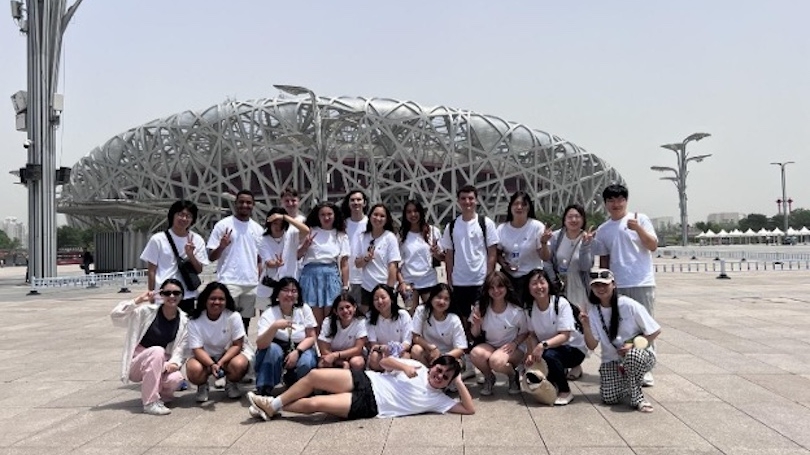
The Chinese LSA+ Program provides participating students with ten weeks of intensive Chinese language training in the vibrant and exciting capital of China. You will live and study in the heart of the city at Beijing Normal University (BNU) which ranks among China's leading universities. Dartmouth students who have completed first-year Chinese prior to the program will study second-year Chinese at BNU; those who have completed second-year Chinese on campus will take third-year Chinese courses. All participants will also take a course on Chinese culture and society taught in English by the program director. Our itinerary will include group excursions to sites in and around Beijing such as the Forbidden City and the Great Wall. We will also travel to Xian, Chengdu, and other parts of the country.
About 18 students are selected for the program.
For more information about applying for this program, see our webpage on How to Apply & our FAQs under section 2 (How to Apply: Application)




 Lei Yan Senior Lecturer
For students who have completed the first-year Chinese sequence at Dartmouth:
CHIN 22
Intermediate Modern Chinese (Second-year level)
CHIN 23
Intermediate Modern Chinese (Second-year level)
For students who have completed second-year Chinese at Dartmouth:
With an average grade of B:
ASCL 10.01
Introduction to Chinese Culture (offered in Spring)
CHIN 1-2-3 or CHIN 4 (for those studying intermediate Chinese in Beijing)
CHIN 22 & 23 (for those studying advanced Chinese in Beijing)
Students live in dormitories and eat in cafeterias on the BNU campus. Students should expect to share a bedroom and bathroom with other students. Language Pledge: Students commit to utilizing the target language in daily interactions and cultural activities.
For more information, please see the department website.
We encourage students to engage with their SAS advisors and program faculty/staff during the exploratory, pre-application phase to discuss how disability-related accommodations and access needs can be supported in an off-campus environment. If you currently have approved accommodations at Hanover, SAS will review them to determine which can be provided at your off-campus location and what alternatives may be needed. On-campus and off-campus accommodations may differ depending on each program location's resources and accessibility features. We recommend beginning this discussion with SAS as soon as you are accepted and no later than at least one whole quarter before your program start date.
For next steps, review the Off-Campus Program Accommodations page on the SAS website.
The fees charged by the College for a Dartmouth-sponsored off-campus term of study include regular tuition charges for a term at Dartmouth, service fees, as well as the specific costs established for each off-campus study locale. In many programs, the room and board costs tend to be higher than for a term in Hanover. You can view a budget sheet for each program by clicking on the appropriate term under "Financing Your Program". The cost of transportation to and from the site is the responsibility of the student.
In order that all qualified Dartmouth undergraduate students may have the opportunity to take part in study away programs, the College endeavors to adjust its normal financial aid awards for students already receiving aid. Tuition and expected family contribution for Dartmouth's study away programs are the same as for an on-campus term.
All costs, including airfare and spending money, are considered when determining the cost of a study away program. Any costs more than a typical term in Hanover are met with additional Dartmouth Scholarship Funds. If you have a work expectation for the term, this will be replaced by scholarship funding for programs that span the entire term.
Students are responsible for purchasing their own plane tickets and, in many cases, meals. Often this means that part of the expected family contribution is used towards these costs rather than for tuition. For help sorting out who pays what and how-- a visit to the Financial Aid Office is often advisable. For more information please also review the study abroad section of the financial aid website.
Financing your program | Financial Aid | Scholarships | Budgeting & Costs
 Hope Rennie Program Administrator
 TBD