Fall 2027
Application Deadline
Feb 1, 2027 3 Months
3 Weeks
2 Days









Students enrolled in Developing Vietnam will explore the vibrant and exciting field of Vietnamese Studies. Our explorations of various aspects of Vietnamese society, culture and politics will be linked by a focus on the theme of development in contemporary Vietnam. We will adopt an interdisciplinary approach that incorporates methods and insights from Human Geography, Urban Studies, Environmental Studies, History, and Art History.
The format of Developing Vietnam is different from that of most other Dartmouth study away programs. All students admitted to this program will enroll in two Developing Vietnam courses: (1) ASCL 70.22, which is the program's co-requisite course, and which will be taught on campus in Hanover at the 9L period during the regular fall term (September-November); and (2) ASCL 59.04, which is the one-credit, three-week intensive course that will take place in Vietnam during the December winterim period. Both Developing Vietnam courses will be counted as fall term courses. In order to be eligible to participate in ASCL 59.04 in December, admitted students must enroll in and successfully complete ASCL 70.22. Besides the two Developing Vietnam courses, students are required to enroll in two additional regular fall term courses, making a total of four fall term courses (ASCL 70.22 + ASCL 59.04 + two additional courses).
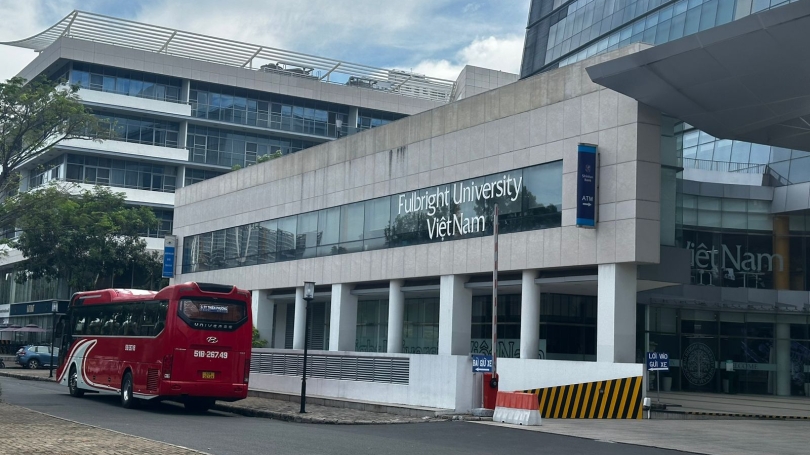
This innovative program is based on Dartmouth's partnership with Fulbright University Vietnam, a new liberal arts university in Ho Chi Minh City. During the fall term, faculty at Dartmouth and Fulbright will each offer courses on Vietnamese Studies with similar learning goals and content. During this time, students from the two universities will work in joint Dartmouth-Fulbright teams to design a research project related to one of the topics they are studying. Then, during the December winterim period, the Dartmouth instructors and students will travel to Ho Chi Minh City for three weeks of intensive research collaboration and co-learning with their Fulbright counterparts. During this time, the joint teams will conduct their field research and present their findings to their instructors and their peers.
For more information please visit the program website.
About 24 students are selected for the program.
For more information about applying for this program, see our webpage on How to Apply & our FAQs under section 2 (How to Apply: Application)
The ASCL Vietnam Fall Term + program is a unique offering. During this program students take two one-credit courses. The first course, ASCL 70.22, is taken during the fall term in Hanover. The second course, ASCL 59.04, is taken as a three-week intensive during the subsequent "winterim" period while students are in Vietnam. Both courses count as credit for the fall term. Students are required to take a full, three-course load during the regular fall term. So, ASCL 59.04 effectively counts as a fourth course for the fall term.
A student's D-plan for the fall term will indicate "R" since they will need to be in residence for the fall term to be eligible for this program. It is not possible to combine a Fall Term + program with another study away program in the fall term. Students enrolled in a Fall Term + Program course are subject to the same withdrawal policies associated with any fall term course.

 Edward Miller Associate Professor
 ASCL | 59 | 04:
Intensive Foreign Study in Vietnam
Please note, participating students will need to take ASCL | 70 | 22: Developing Vietnam: History, Environment and Culture in the fall term that immediately precedes this program as ASCL 59.04 is a direct continuation of the coursework done in ASCL 70.22.
To be eligible for participation students must have taken at least one ASCL course (or a non-ASCL course with significant Asian Studies content) prior to the start of the program, in addition to ASCL 70.22.
 Erin Collins Assistant Professor
 ASCL | 59 | 04:
Intensive Foreign Study in Vietnam
Please note, participating students will need to take ASCL | 70 | 22: Developing Vietnam: History, Environment and Culture in the fall term that immediately precedes this program as ASCL 59.04 is a direct continuation of the coursework done in ASCL 70.22.
To be eligible for participation students must have taken at least one ASCL course (or a non-ASCL course with significant Asian Studies content) prior to the start of the program, in addition to ASCL 70.22.
The program gives students the opportunity to experience Vietnam through research and cultural immersion. We anticipate that students will live in a hotel with easy access to the Fulbright Vietnam campus, as they have in past years. Students should expect to share a room with one other Dartmouth student enrolled in the program; we expect that all rooms will have an ensuite bathroom and a small kitchenette.
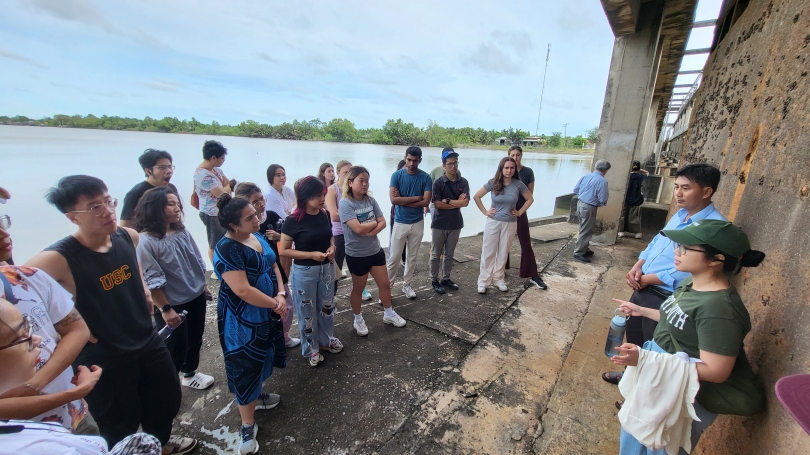
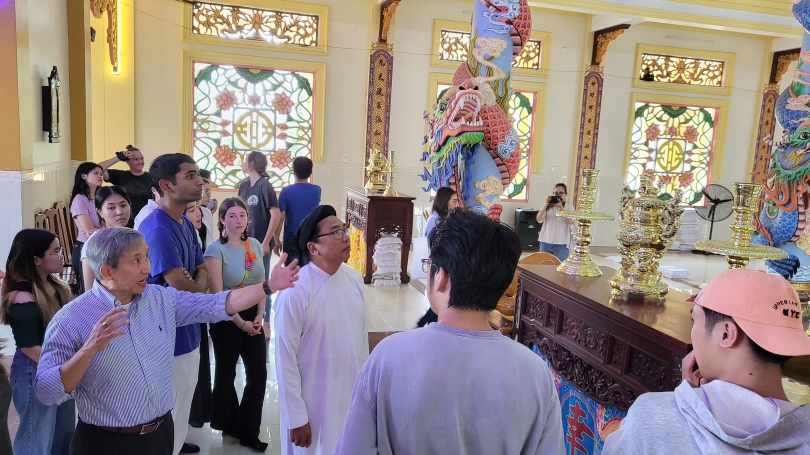
The program will incorporate multiple-day excursions which may include participation in a meditation session at Xa Loi Buddhist Temple, a visit to the Cần Giờ mangrove bioreserve, and a weekend trip to the Mekong Delta province of Bến Tre. Students will already be familiar with the environmental histories of these places from their work in the earlier course.
We encourage students to engage with their SAS advisors and program faculty/staff during the exploratory, pre-application phase to discuss how disability-related accommodations and access needs can be supported in an off-campus environment. If you currently have approved accommodations at Hanover, SAS will review them to determine which can be provided at your off-campus location and what alternatives may be needed. On-campus and off-campus accommodations may differ depending on each program location's resources and accessibility features. We recommend beginning this discussion with SAS as soon as you are accepted and no later than at least one whole quarter before your program start date.
For next steps, review the Off-Campus Program Accommodations page on the SAS website.
Please note that the tuition and fees you pay to the college for the fall term will include the Fall Term+ course associated with this off-campus program. There will be additional room and board costs billed to your student account associated with the off-campus program. These fees, in addition to any estimated out of pocket expenses will be eligible for financial aid for those students who qualify.
In order that all qualified Dartmouth undergraduate students may have the opportunity to take part in off-campus programs, the College endeavors to adjust its normal financial aid awards for students already receiving aid. Tuition and expected family contribution for Dartmouth's off-campus programs are the same as for an on-campus term.
All costs, including airfare and spending money, are considered when determining the cost of an off-campus program. Any costs more than a typical term in Hanover are met with additional Dartmouth Scholarship Funds. If you have a work expectation for the term, this will be replaced by scholarship funding for programs that span the entire term. We do not replace work expectations for our Fall Term + programs as students are in Hanover for the 10 week term and remain eligible to work.
Students are responsible for purchasing their own plane tickets and, in many cases, meals. Often this means that part of the expected family contribution is used towards these costs rather than for tuition. For help sorting out who pays what and how-- a visit to the Financial Aid Office is often advisable. For more information please also review the study abroad section of the financial aid website.
Financing your program | Financial Aid | Scholarships | Budgeting & Costs

 TBD
TBD